
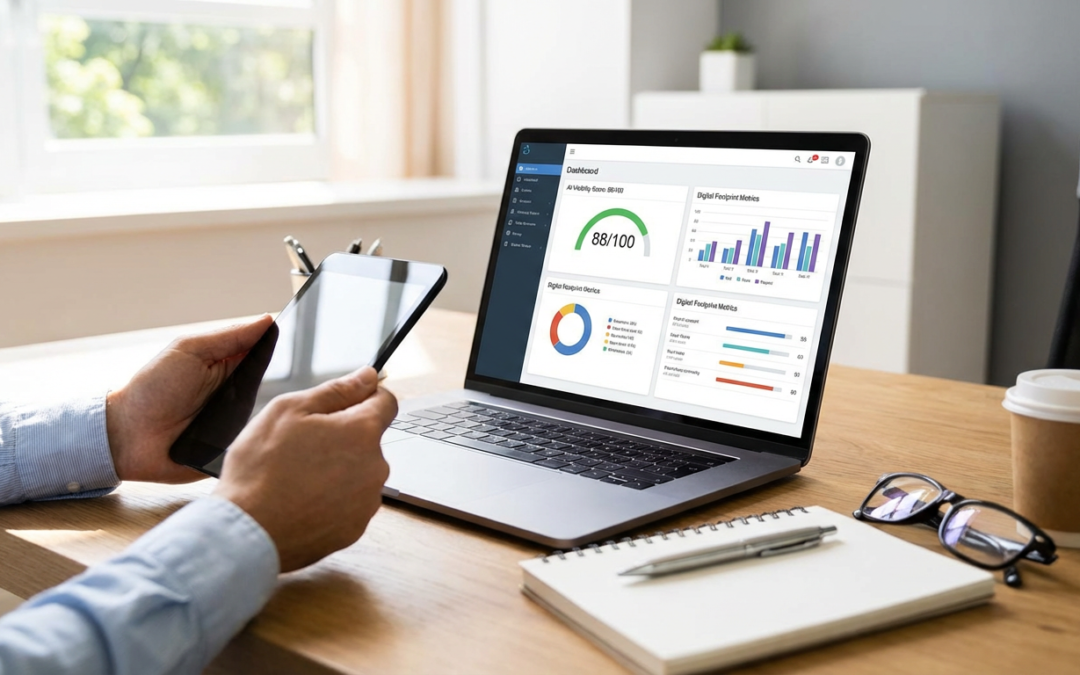
AI Visibility Tracking Tools Compared: 10 Platforms Reviewed for Measuring Your Digital Presence
If you’re trying to understand how visible you are to AI systems like ChatGPT, Claude, or Perplexity, you need more than guesswork. You need actual tools that measure your AI visibility score. But with so many options on the market, which one actually delivers? This list compares ten platforms and approaches for tracking your AI visibility, weighing their strengths against their weaknesses. You’ll learn what each tool does well, where it falls short, and how they stack up against each other so you can make an informed choice.
- Legiit: Freelance Marketplace with AI Content Analysis
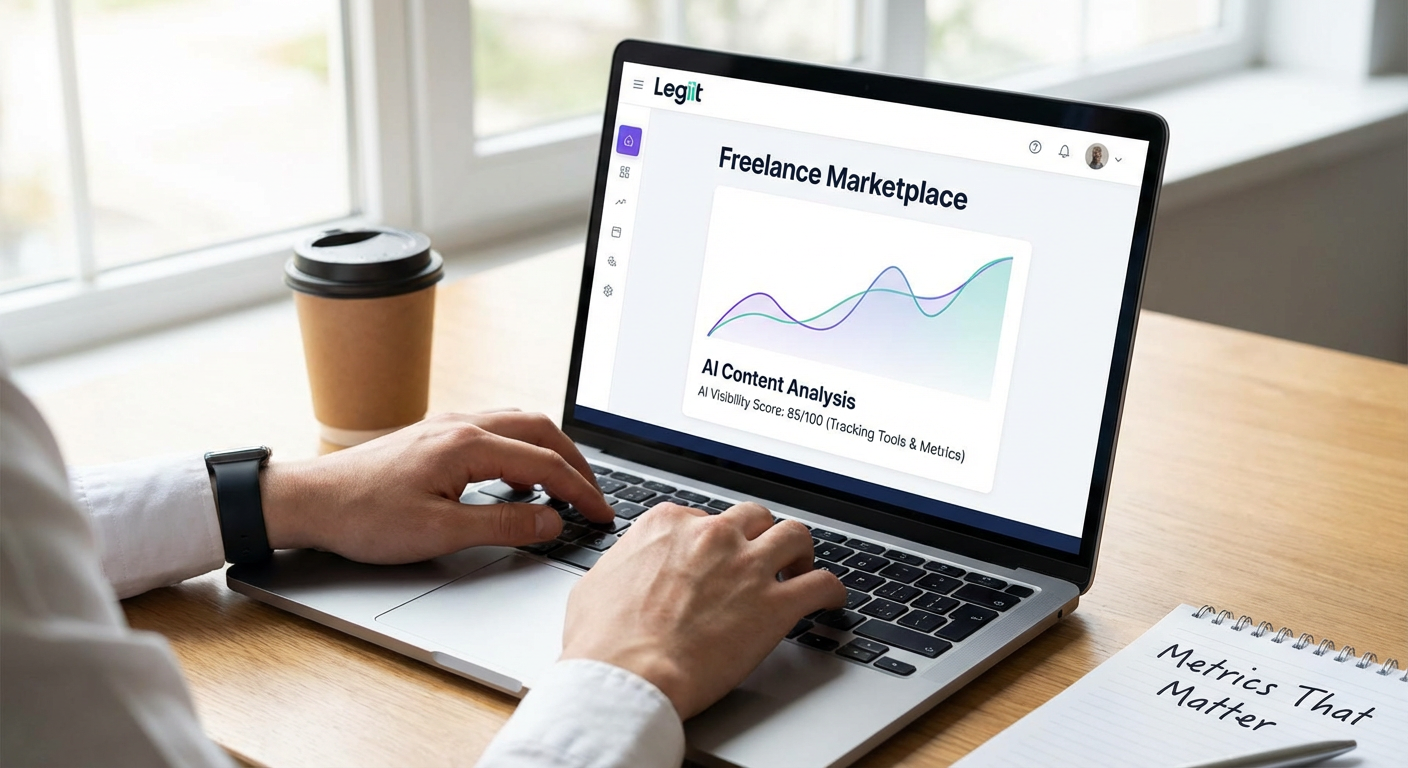
Legiit stands out as a freelance services platform that connects you with specialists who can audit and improve your AI visibility. Unlike software tools that spit out automated reports, Legiit lets you work directly with experts who analyze your content, identify gaps in AI discoverability, and provide custom recommendations. The main advantage is the human element: you get tailored advice instead of generic metrics. The trade-off is that hiring a freelancer takes longer than running an instant scan, and costs vary depending on the specialist you choose.
What makes Legiit particularly useful is the range of services available. You can find SEO experts who understand AI crawling patterns, content writers who optimize for language models, and strategists who track how AI systems reference your brand. This flexibility beats rigid software tools that only measure one aspect of visibility. However, if you prefer a self-service dashboard you can check daily, a freelancer-based approach might feel less convenient than an always-on monitoring tool.
- Manual AI Query Testing vs. Automated Tracking Software
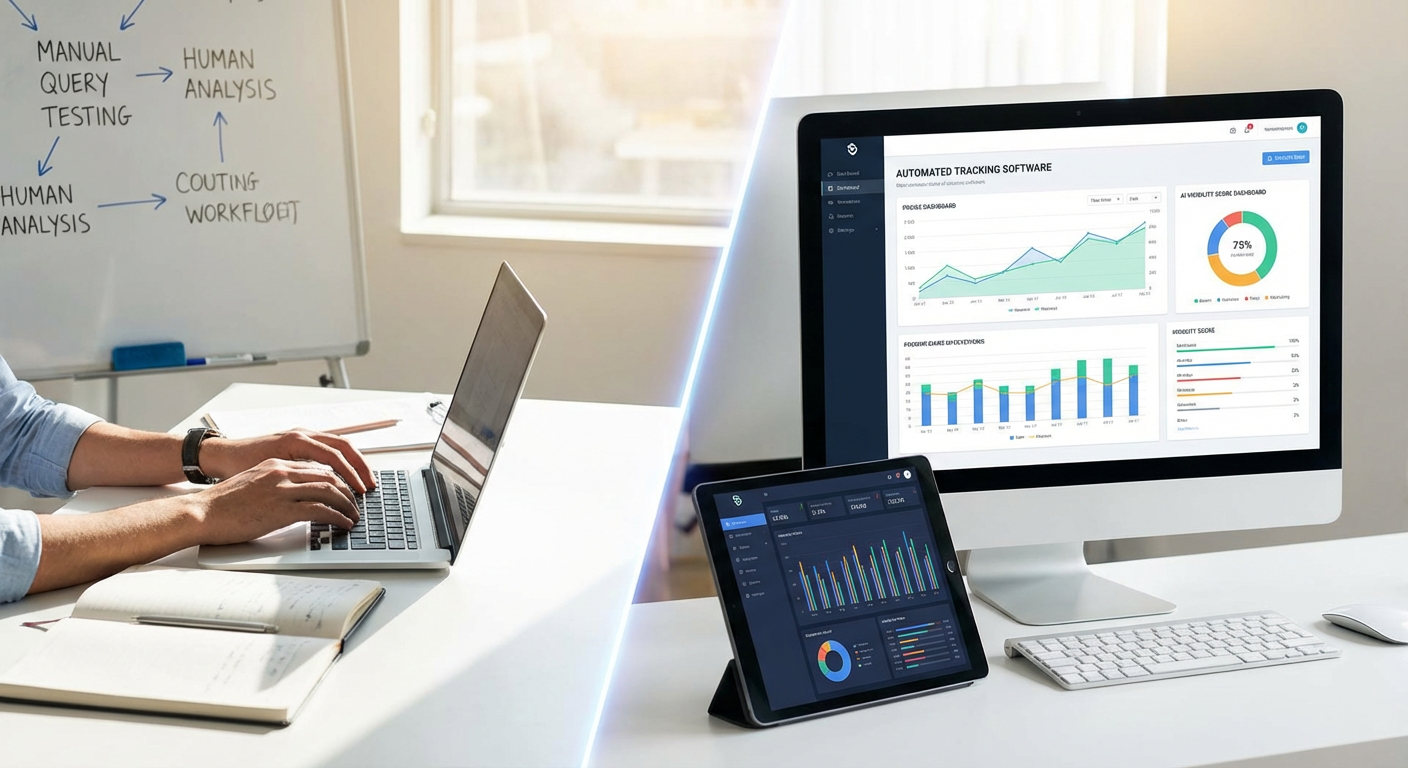
One of the most basic ways to track AI visibility is simply asking ChatGPT, Claude, Perplexity, and other AI tools about your brand or topic, then recording whether they mention you. This manual method costs nothing and gives you direct insight into what these systems actually say. The downside is obvious: it’s time-consuming, inconsistent, and hard to scale. You can’t manually test hundreds of queries every week without burning out.
Automated tracking software solves the scale problem by running queries for you and logging the results. Tools in this category can test dozens of variations and track changes over time without any manual effort. However, automated tools come with subscription fees, and some struggle to capture the nuance of AI responses. A human tester might notice that an AI mentions your competitor more favorably, while automated software might only count raw mentions. The best approach often combines both: use automation for volume and manual testing for quality checks.
- Brand Monitoring Platforms vs. Specialized AI Visibility Tools
Traditional brand monitoring platforms like Mention or Brand24 have started adding AI visibility features to their existing services. These tools already track social media, news sites, and forums, so adding AI mentions feels like a natural extension. The advantage here is consolidation: you get one dashboard for all your visibility metrics. The problem is that these platforms often treat AI visibility as an add-on rather than a core feature, which means the tracking may lack depth.
Specialized AI visibility tools, by contrast, focus exclusively on how language models reference your content. They tend to offer more detailed analysis of AI citation patterns, response quality, and competitive positioning within AI outputs. The trade-off is that you’ll need to manage multiple tools if you also want traditional media monitoring. If AI visibility is your top priority, a specialized tool usually provides better data. If you want a single dashboard for everything, a brand monitoring platform with AI features might be more convenient despite being less thorough.
- Free DIY Spreadsheet Tracking vs. Paid Dashboard Solutions
You can build your own AI visibility tracker using nothing but a spreadsheet, a list of test queries, and some discipline. Each week, you run your queries through various AI tools, record the results, and note whether your brand appears, how prominently, and in what context. This approach costs zero dollars and gives you complete control over what you measure. The downside is the manual labor involved and the risk of inconsistency if you don’t follow the same process every time.
Paid dashboard solutions automate this entire workflow and present your data in visual charts that make trends obvious at a glance. They save hours of work and reduce human error. However, they require monthly or annual subscriptions that can add up, especially if you’re tracking multiple brands or clients. For solopreneurs or small businesses just starting to think about AI visibility, the spreadsheet method makes sense. For agencies or larger companies that need reliable, repeatable data, paying for a dashboard usually pays for itself in time saved.
- Citation Tracking Tools vs. Sentiment Analysis Platforms
Some AI visibility tools focus purely on whether you get cited: did the AI mention your brand, yes or no? These citation tracking tools count mentions, track frequency, and show you which queries trigger references to your content. They’re straightforward and easy to understand. The limitation is that they don’t tell you how the AI talks about you. A mention in a list of problematic companies counts the same as a glowing recommendation.
Sentiment analysis platforms add a layer of interpretation by evaluating the tone and context of AI mentions. They flag whether the AI portrays you positively, negatively, or neutrally, and some even score the quality of the mention. This gives you a richer picture of your AI reputation, not just your visibility. The trade-off is complexity: sentiment analysis isn’t perfect, and these tools sometimes misread context or miss subtle negativity. If you’re primarily concerned with awareness, citation tracking is enough. If reputation matters as much as visibility, sentiment analysis is worth the extra complexity.
- API-Based Custom Solutions vs. Off-the-Shelf Software
If you have technical resources, you can build a custom AI visibility tracker using APIs from OpenAI, Anthropic, and other providers. This approach lets you design exactly the metrics you care about, test the specific queries relevant to your business, and integrate the data into your existing analytics stack. The control and customization are unmatched. The downside is the upfront investment: you need developers to build it, ongoing maintenance to keep it running, and API costs that scale with usage.
Off-the-shelf software gives you a working solution immediately with no coding required. You sign up, configure your tracking parameters, and start collecting data within minutes. These tools are maintained by the vendor, so you don’t worry about updates or technical issues. However, you’re limited to whatever features the software offers, and customization options are usually minimal. For companies with unique tracking needs or complex workflows, custom solutions make sense despite the higher cost. For most businesses, off-the-shelf software provides enough functionality at a fraction of the effort.
- Real-Time Monitoring Tools vs. Weekly Report Services
Real-time monitoring tools constantly query AI systems and alert you the moment your visibility changes. If a new AI model suddenly starts citing your competitor instead of you, you know within hours. This immediacy lets you react quickly to shifts in AI behavior. The downside is information overload: constant alerts can become noise, and not every fluctuation matters. Real-time tools also tend to cost more because they require more infrastructure to run continuous queries.
Weekly report services take a snapshot of your AI visibility once a week and send you a summary. This reduces noise and gives you time to focus on other work without constant interruptions. The trade-off is delayed awareness: if something changes on Monday, you won’t know until the next report arrives. For most businesses, weekly reporting provides enough information to spot trends without overwhelming your team. Real-time monitoring makes sense if you’re in a highly competitive space where every advantage matters, or if you’re actively running campaigns where timing is critical.
- Competitor Comparison Features vs. Self-Only Tracking
Some AI visibility tools let you track not just your own mentions but also how you compare to competitors. These platforms show you side-by-side data: when the AI recommends your competitor instead of you, which topics favor them, and how your citation frequency stacks up. This competitive intelligence helps you identify gaps in your strategy. The limitation is that tracking multiple brands increases complexity and often costs more, especially if the tool charges per tracked entity.
Self-only tracking tools focus exclusively on your brand without the comparison element. They’re simpler to set up, easier to interpret, and usually cheaper. However, you miss the context that comes from knowing how you perform relative to others in your space. If you’re just starting to measure AI visibility, self-only tracking helps you establish a baseline without overwhelming yourself with data. Once you have that foundation, adding competitor comparison gives you the strategic insight needed to outmaneuver rivals in AI recommendations.
- Query Volume Tools vs. Response Quality Analyzers
Query volume tools focus on testing as many different queries as possible to see where you show up. They might run hundreds of variations of questions related to your industry, logging every mention. This broad approach helps you understand the full scope of your AI visibility across many contexts. The weakness is that volume doesn’t always equal value: showing up in irrelevant queries doesn’t help your business, and these tools sometimes lack depth in analyzing what the mentions actually mean.
Response quality analyzers take the opposite approach: they test fewer queries but examine each AI response in detail. They evaluate whether your mention is prominent or buried, whether the AI recommends you or just lists you, and whether the context is favorable. This depth gives you actionable insights about which mentions actually drive value. The trade-off is limited coverage: you might miss important visibility gaps because you’re not testing enough query variations. The ideal solution combines both approaches, using volume tools to map your visibility landscape and quality analyzers to prioritize improvements.
- Enterprise Multi-User Platforms vs. Individual Account Tools
Enterprise platforms designed for teams offer features like role-based access, shared dashboards, collaborative reporting, and integration with tools like Slack or Microsoft Teams. Multiple team members can track AI visibility together, assign tasks based on findings, and maintain consistent processes across departments. These platforms are built for scale and coordination. The obvious downside is cost: enterprise tools come with enterprise pricing, and many require annual contracts with minimum user counts.
Individual account tools are built for solo users or small teams that don’t need collaboration features. They’re typically cheaper, with month-to-month pricing and simpler interfaces. You can start tracking AI visibility without getting approval from procurement or committing to a long contract. However, if your team grows or you need to share access with clients or colleagues, these tools become limiting. For freelancers, consultants, and small businesses, individual tools provide everything you need at a reasonable price. For agencies or larger companies tracking AI visibility across multiple brands or clients, enterprise platforms justify their higher cost through collaboration features and better support.
Choosing the right AI visibility tracking tool comes down to your specific needs, budget, and how hands-on you want to be. Manual methods and spreadsheets work fine when you’re starting out, but they don’t scale well. Automated tools save time but vary widely in what they actually measure and how much they cost. The best approach is often a combination: use automated tracking for consistent data collection, add manual checks for quality control, and consider whether you need real-time alerts or weekly summaries. Start simple, measure what matters to your business, and add complexity only when you’ve outgrown your current solution. Your AI visibility score is only useful if you actually use the data to improve your content and strategy.
Recent Comments