

20 Budget-Friendly Platforms That Give You a Single-Pane Business View
Running a business means juggling data from sales, marketing, customer service, finance, and operations. When information lives in different tools, you waste time switching tabs and reconciling numbers. A single-pane view brings everything together in one dashboard, so you can make faster decisions with complete information. The good news? You don’t need a massive budget to get this visibility. Many platforms offer affordable plans, generous free tiers, or strong value for money. This list focuses on options that won’t break the bank while still giving you the consolidated view your business needs.
- Legiit

Legiit offers an affordable way to manage your service business from one central dashboard. You can handle client projects, track deliverables, manage payments, and communicate with customers without switching between different tools. The platform charges no monthly fees for basic use, taking only a small percentage when you complete transactions. This makes it ideal for freelancers and small agencies who want visibility across their entire operation without committing to expensive monthly subscriptions. You get project management, client communication, and financial tracking in one place, which simplifies your workflow considerably.
- Zoho One
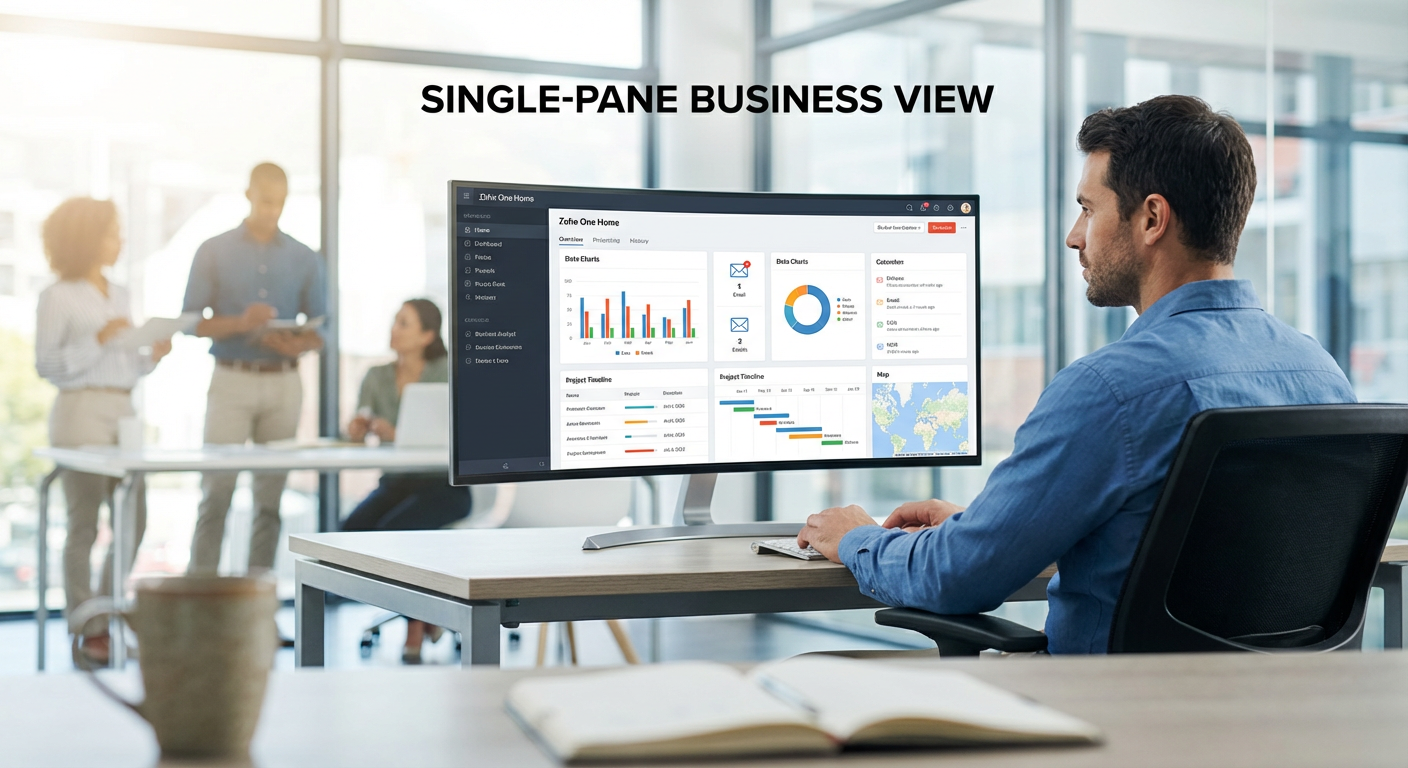
Zoho One bundles over 40 business applications into a single subscription at a fraction of what you’d pay for separate tools. You get CRM, project management, accounting, email marketing, helpdesk, and analytics all accessible from one unified dashboard. The pricing model charges per employee rather than per application, which means significant savings as your team grows. For small to medium businesses watching their budget, this represents exceptional value because you’re essentially getting an entire business software suite for the cost of one or two standalone tools.
- HubSpot CRM
HubSpot offers a permanently free CRM that serves as a central hub for customer interactions, sales pipeline, and marketing activities. You can track every customer touchpoint, monitor deal progress, and view team performance without paying a cent. The free tier is genuinely useful, not just a limited trial, making it perfect for budget-conscious businesses. As you grow, you can add paid modules, but many small businesses run successfully on the free version alone. The dashboard brings together contact history, email tracking, and task management in one clear view.
- Bitrix24
Bitrix24 provides a free plan for unlimited users, which is rare among business platforms. You get CRM, task management, document storage, team chat, and video conferencing all in one interface. The free version includes 5GB of storage and covers most core business needs, making it an excellent choice for startups and small teams. Even the paid plans remain affordable compared to buying separate tools for each function. The unified workspace means your team can collaborate, track customers, and manage projects without leaving a single screen.
- Notion
Notion combines notes, databases, wikis, and project management in one flexible workspace at very low cost. The personal plan is free forever, and the team plan costs significantly less than traditional project management software. You can build custom dashboards that pull together information from different areas of your business, creating your own single-pane view. Many businesses use Notion as their operating system, tracking everything from customer data to content calendars to financial planning. The flexibility means you’re not locked into someone else’s structure, and you only pay for what you actually need.
- Trello with Power-Ups
Trello’s free tier offers generous functionality, and when you add free Power-Ups, you can connect multiple data sources into one visual board. You can link your calendar, integrate simple time tracking, and connect to other tools you’re already using. For teams on a tight budget, Trello provides a visual way to see projects, workflows, and tasks at a glance. The paid plans remain affordable and add features like dashboard views and unlimited Power-Ups. Many small businesses find they can run their entire operation through Trello boards without spending much at all.
- Airtable
Airtable blends the simplicity of spreadsheets with database power, letting you track anything from customer orders to inventory to marketing campaigns. The free plan supports unlimited bases and 1,200 records per base, which covers many small business needs. You can create different views of the same data, including kanban boards, calendars, and galleries, giving you multiple perspectives from one source of truth. The interface is intuitive enough that you won’t need expensive training or consultants. For businesses that need custom tracking without custom development costs, Airtable delivers strong value.
- ClickUp
ClickUp offers a generous free plan that includes unlimited tasks and members, which immediately makes it budget-friendly. The platform combines project management, docs, goals, time tracking, and dashboards in one application. You can create custom views that show exactly what you need to see, whether that’s sales pipeline, content calendar, or sprint progress. The paid tiers remain competitively priced and add features like advanced reporting and automation. Many teams switch to ClickUp specifically to reduce software costs while gaining better visibility across their work.
- Google Workspace
Google Workspace provides email, document collaboration, cloud storage, and video meetings at a low monthly cost per user. While it’s not a traditional business management platform, many small businesses build their entire operation around Google tools using Sheets for tracking and Sites for internal dashboards. The shared drive functionality means everyone sees the same information, creating a single source of truth. For businesses already comfortable with Google’s interface, this represents familiar territory at an affordable price. You can integrate thousands of other tools through the workspace marketplace to extend functionality.
- Monday.com
Monday.com provides a visual work operating system with pricing tiers that scale with your needs. The individual plan is free for up to two users, perfect for solopreneurs or tiny teams. The platform lets you track projects, customers, sales, and operations in customizable boards that all feed into a unified dashboard. While the paid plans can add up, they still cost less than licensing multiple specialized tools. The color-coded, visual approach makes it easy to spot bottlenecks and priorities at a glance. Many users appreciate that they can start small and add features only when budget allows.
- Odoo Community Edition
Odoo offers a free, open-source community edition that includes CRM, project management, inventory, and basic accounting. You can self-host it to avoid monthly fees entirely, though you’ll need some technical capability. For businesses with technical resources or a willingness to learn, this represents enormous value because you get enterprise-level functionality at zero software cost. The integrated nature means data flows automatically between modules, giving you complete visibility across business functions. If you later need support or additional features, the paid enterprise edition remains reasonably priced.
- Streak
Streak lives inside Gmail, turning your inbox into a CRM and project management tool. The free plan supports up to 500 contacts and basic pipeline management, making it perfect for small businesses and freelancers. Since you’re already spending time in email, having customer data and deal tracking in the same interface eliminates context switching. You can see customer history, deals, and tasks without opening another application. The paid plans remain affordable and add features like mail merge and reporting. For businesses that live in Gmail anyway, Streak provides centralized visibility without learning a new tool.
- Asana
Asana’s free tier supports up to 15 team members with unlimited tasks, projects, and activity logs. You can track work across departments, assign responsibilities, and view progress through timeline and board views. The platform helps teams coordinate without expensive project management software, and the interface is clean enough that adoption happens quickly. Paid plans add features like dashboards and workload management, but many small teams thrive on the free version. The ability to see who’s working on what, and where projects stand, creates transparency across your operation without stretching your budget.
- Basecamp
Basecamp charges a flat monthly fee regardless of how many users you have, which becomes incredibly cost-effective as your team grows. You get project management, team chat, document storage, and scheduling all in one place. Unlike per-seat pricing that punishes growth, Basecamp’s model means you can add people freely. The simple, organized interface shows what everyone’s working on and where things stand. For businesses that hate surprise bills and want predictable costs, Basecamp offers peace of mind. Everything your team needs to communicate and coordinate lives in one organized space.
- Capsule CRM
Capsule offers a free plan for up to two users with 250 contacts, which works well for freelancers and very small businesses. The interface is straightforward, showing customer relationships, sales pipeline, and task lists without overwhelming complexity. You can track every interaction with contacts, see deal progress, and manage follow-ups from one dashboard. The paid plans remain among the most affordable in the CRM space while adding features like custom fields and reporting. For businesses that need customer visibility without enterprise pricing, Capsule hits a sweet spot between functionality and cost.
- Smartsheet
Smartsheet combines the familiarity of spreadsheets with powerful project management features. While not free, the pricing remains competitive, especially considering you get resource management, automation, and dashboard capabilities. You can create sheets that track different business areas, then roll them up into dashboards that show overall health. The spreadsheet-like interface means minimal learning curve, reducing training costs. Many businesses find they can replace several specialized tools with Smartsheet, achieving both consolidation and cost savings. The ability to create custom views means everyone from operations to executives can see what they need.
- Pipedrive
Pipedrive focuses specifically on sales pipeline visibility at a price point accessible to small businesses. The entry-level plan costs less than most CRMs while providing clear visual pipeline management, contact tracking, and activity scheduling. You can see exactly where every deal stands and what actions will move them forward. The interface prioritizes simplicity, which means less time training and more time selling. For businesses where sales visibility is the priority, Pipedrive delivers focused functionality without paying for features you won’t use. The mobile app keeps your pipeline view available wherever you work.
- Wrike
Wrike offers a free plan for unlimited users with limited projects, making it useful for small teams testing project management tools. The platform provides task management, file sharing, and basic reporting in one interface. You can create custom workflows that match how your business actually operates, then view progress through various lenses. Paid plans add advanced features like time tracking and resource management at competitive prices. The consolidated view helps teams coordinate complex projects without expensive enterprise software. Many businesses start with the free version and upgrade only when they’ve proven the value.
- Agile CRM
Agile CRM provides a free plan for up to 10 users that includes contact management, deals, and basic automation. This makes it one of the most generous free CRMs available, perfect for startups watching every dollar. You get sales tracking, email integration, and task management in one dashboard. The paid tiers remain affordable while adding marketing automation and helpdesk features. For businesses that need to see customer relationships, sales progress, and team tasks together, Agile CRM delivers surprising functionality at minimal cost. The all-in-one approach means fewer tools to manage and pay for.
- Coda
Coda reimagines documents as applications, letting you build custom trackers, databases, and workflows at very low cost. The free plan is genuinely useful, not just a teaser, and includes unlimited docs with up to 1,000 objects. You can create a custom business dashboard that pulls together information exactly how you need it. The flexibility means you’re not paying for pre-built features you don’t use. Many businesses build their entire operating system in Coda, tracking customers, projects, finances, and operations in connected documents. The ability to customize everything means the tool grows with your business without forcing expensive upgrades.
A single-pane view of your business doesn’t require a massive software budget. Many platforms now offer free tiers, affordable pricing, or flexible models that scale with your growth. The key is choosing tools that consolidate multiple functions rather than adding more disconnected applications. Start with one platform that addresses your biggest visibility gap, whether that’s customer relationships, project tracking, or team coordination. As you prove the value, you can expand features or integrate additional tools. The platforms on this list prove that clear business visibility is accessible at almost any budget level. Pick one, set it up properly, and enjoy the clarity that comes from seeing your entire operation in one place.
Recent Comments